Clear Vision for the Road - A Guide to Driving and Your Eyes
Driving might feel like it’s second nature, but its actually one of the most visually demanding tasks we perform. It requires more than just seeing the car in front; you need sharp distance vision (visual acuity) to read road signs and a wide "all-around" view (peripheral vision) to spot hazards from the side.
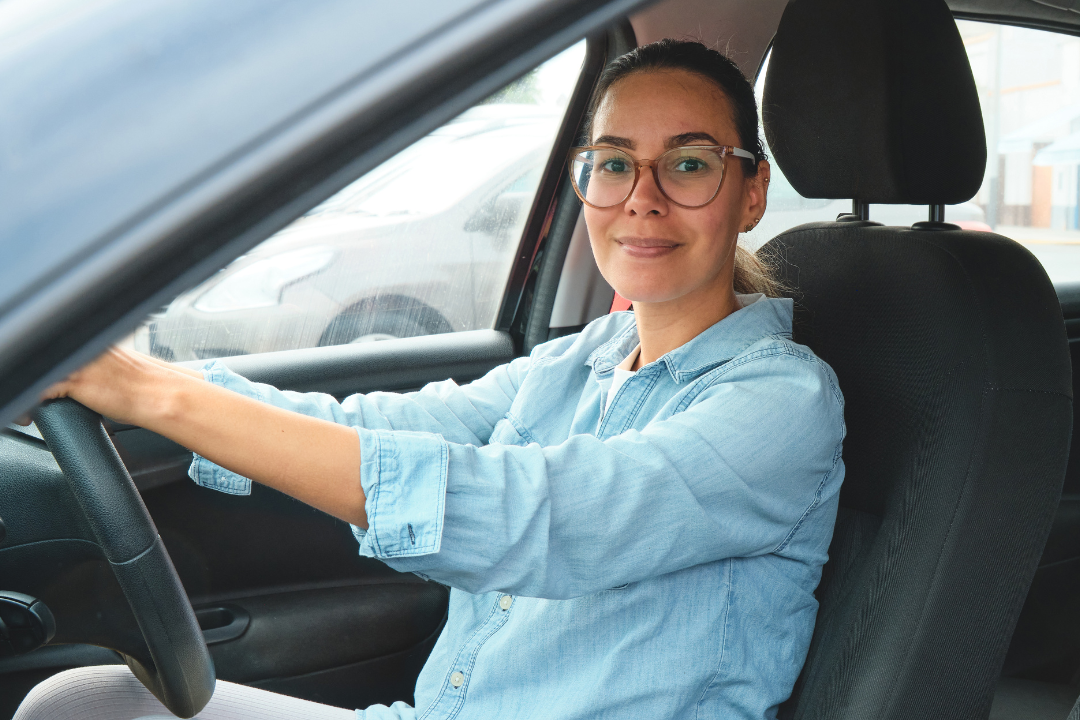
What are the legal eyesight standards for driving?
According to the DVLA website the standards of vision for driving a car are:
🚙 You must be able to read (with glasses or contact lenses, if necessary) a car number plate made after 1 September 2001 from 20 metres.
👀 You must meet the minimum eyesight standard for driving by having a visual acuity of at least decimal 0.5 (6/12) measured on the Snellen scale (with glasses or contact lenses, if necessary) using both eyes together or, if you have sight in one eye only, in that eye.
🚗 You must also have an adequate field of vision.
If you need glasses or contact lenses to meet this standard, the law requires you to wear them every time you get behind the wheel.
Remember, you could be prosecuted if you drive without meeting the standards of vision for driving.
Driving as we get older
Once you reach the age of 70, you must renew your driving licence every three years. As part of this process, you are asked to legally declare that you still meet the minimum eyesight standards.
Many eye conditions (such as cataracts or glaucoma) develop slowly and without pain, so you might not notice your vision slipping. While you are not currently required to provide professional medical evidence, the government is taking steps to make formal vision checks compulsory for drivers aged 70 and over at licence application and renewal. We expect this to come into force in 2026. To ensure you are safe, and confident on the road we strongly recommend booking a professional assessment before your next renewal.
Overcoming the Challenges of Driving at Night
1/4 of British motorists admit they have difficulty focusing when driving at night. Many experience visual discomfort caused by glare from oncoming headlights and say things look blurred. So it's no surprise that more road accidents occur at night than during the day.
Here are our night time driving tips:
Ensure your eyewear has an up-to-date prescription
Never wear dark or tinted lenses when driving at night
Keep your windscreen clean inside and out to avoid glare
Check your wiper blades for wear and replace if necessary
Make sure your lights are working properly
If you're affected by oncoming headlights, try concentrating on the nearside kerb as you drive.
If you do experience glare its important to rule out Cataracts. As we age, the lens inside the eye can become cloudy, which scatters light and makes night driving difficult. An eye test can rule this out.
If your eye health is fine, the best solution is often a high-quality anti-reflection coating such as Seacoat Drive from Nikon which helps to reduce the glare from headlights and street lights when driving in the dark, improving comfort and confidence for the wearer. This coating not only provides protection against harsh, fluorescent night lighting, it also provides better vision during the day.
We generally advise against using tinted "night driving" glasses off the shelf, as they can actually reduce the amount of light reaching your eyes, making it harder to see hazards in the dark.
Selecting the Best Lenses for Daytime Driving
The right lens technology can significantly reduce eye fatigue and improve your reaction times during the day.
Polarised Lenses
These are the gold standard for driving. They specifically block the blinding glare reflected off wet roads or the hoods of other cars.
Driving-Specific Varifocals
If you wear varifocals, you might find that standard designs make the dashboard or wing mirrors feel blurry. We can provide specialised varifocal designs with wider zones for distance and mid-range vision, specifically tailored for the car.
Tints and Contrast
Brown or grey tints are excellent choices as they provide sun protection without distorting traffic light colours.
When should you notify the DVLA?
You are not required to notify the DVLA if you are simply short-sighted, long-sighted, or colour blind. However, you must inform them if you develop a condition that affects both eyes (or your remaining eye), such as glaucoma or significant macular degeneration. If you are ever unsure, we can advise you on whether your condition needs to be reported.
Is your vision road-ready?
If your eyes feel tired after driving, or if you find yourself squinting to see road signs, it’s time for a check-up!
At Blink, we combine clinical expertise with the latest lens technology to ensure you stay safe, comfortable, and legal on the road.
If you have any concerns or want to make sure your prescription is up to date, book in for an eye examination and we'll help make sure your vision is ready for the road.