Hyperopia (long-sightedness)
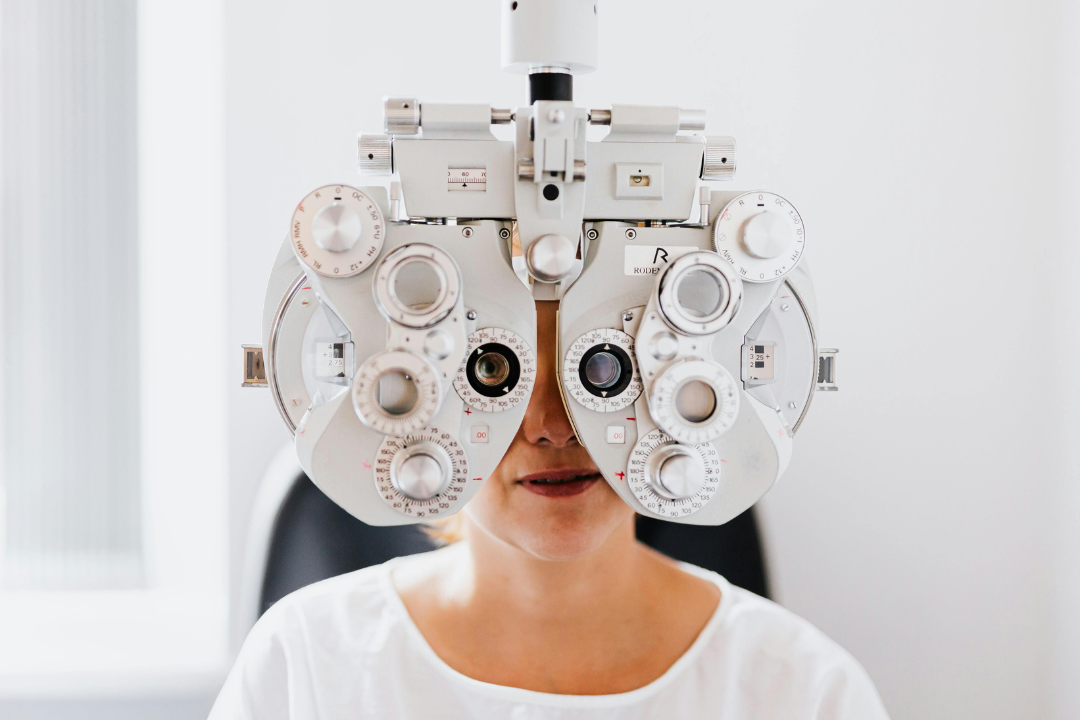
Hyperopia is the official term for long-sightedness. People with hyperopia generally see things clearly at a distance but have difficulty maintaining focus on anything up close.
Hyperopia occurs when light entering your eye doesn’t focus directly on the retina at the back, but rather "behind" it. This may be because:
the eyeball is slightly too short
the cornea is too flat
the lens is unable to focus properly
Signs you might be long-sighted
Hyperopia can be a bit of a "hidden" condition because your eye muscles often compensate for the blur by overworking. This is known as accommodation. You might not even realise your vision is blurry, but you may notice:
Headaches: Especially after a long day at the office or an evening spent reading.
Eye Strain: A heavy, tired feeling around the eyes.
Squinting: Finding yourself narrowing your eyes to bring close up text into focus.
Blurred Vision: Specifically when looking at things up close, like the menu at your favourite local café.
Hyperopia vs. Presbyopia: What’s the difference?
It's common to confuse Hyperopia with Presbyopia as both conditions make it difficult to see things up close. However, they happen for very different reasons:
Hyperopia is usually related to the shape of your eye (the eyeball being too short). It can affect people of any age, including children and young adults.
Presbyopia is an age-related change that happens to everyone, usually starting in your mid-40s. It occurs because the natural lens inside your eye becomes less flexible over time, making it harder to switch focus from the distance to a book or phone.
Although the causes are different, Hyperopia and Presbyopia can both be treated in the same way.
Hyperopia in Children
Many children are born slightly long-sighted. In most cases, their eyes grow and the condition corrects itself. However, if hyperopia is significant, it can lead to problems like a squint (eye turn) or a "lazy eye" because the child is struggling so hard to focus.
Since children don’t always know that their vision isn't "normal," regular eye tests are essential.
How is Hyperopia treated?
The good news is that Hyperopia is very easily corrected with glasses and/or contact lenses. At Blink we’ll conduct a thorough eye examination and determine your prescription and help you choose a solution that fits your lifestyle e.g.
Reading Glasses - used only for close up tasks such as reading and using your phone
Occupational Lenses - If you spend your day switching between a computer screen at 1-2 mtrs distance and close up tasks e.g. books, notes or your phone, we can talk to you about occupational lenses that offer a much wider field of near-vision than standard glasses.
Contact Lenses: If you’d prefer a specs-free look, we can fit you with comfortable contact lenses that correct hyperopia seamlessly.
Get in touch with Blink
If you have any questions or concerns about you or your child’s eyesight please get in touch with us at Blink - we're here to help!
Book an appointment or give us a call on 01786 832061